
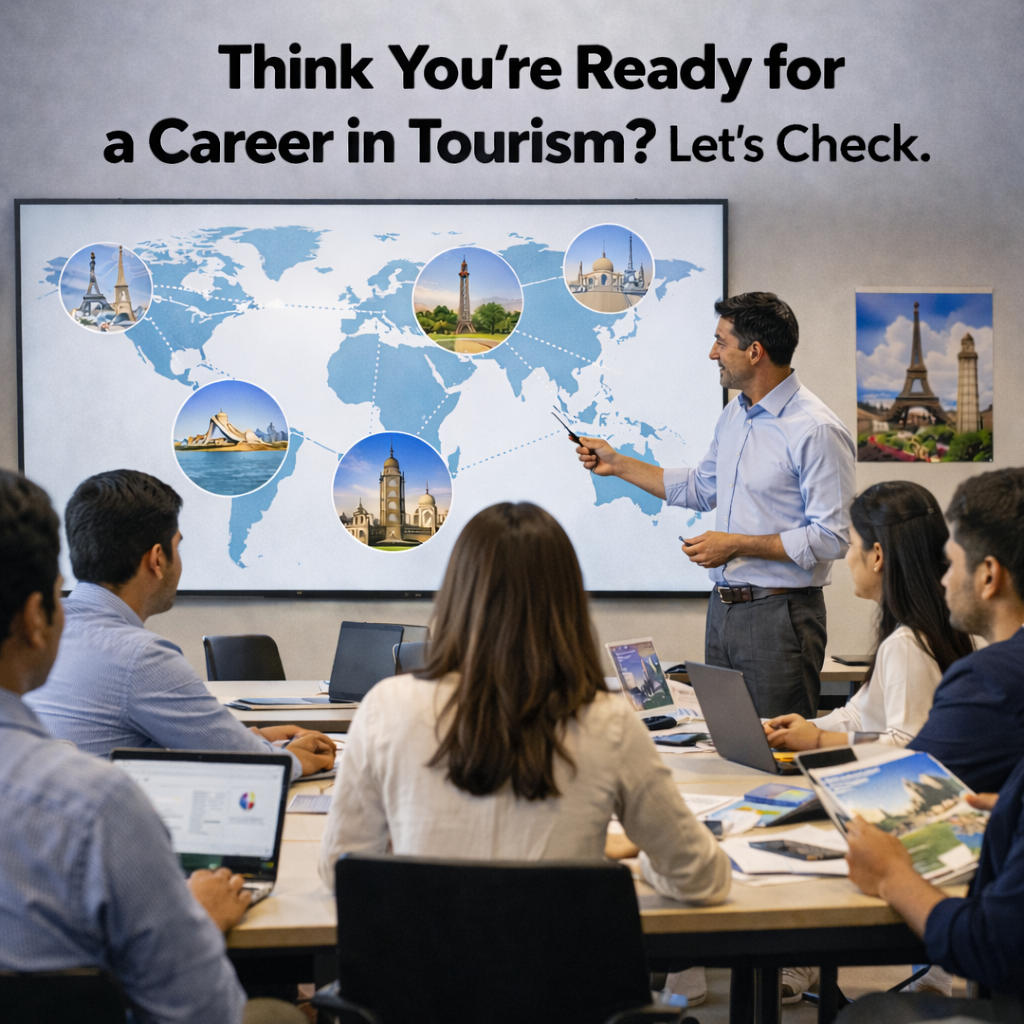
Introduction :
Are you passionate about travel but unsure how to turn that passion into a stable career? Many aspiring professionals struggle to enter the tourism industry because they lack the right skills, industry knowledge, and professional training. This is where a tourism & travel academy can make a real difference.
The global tourism sector is rapidly expanding and creating millions of career opportunities.
Key industry statistics
- The global travel and tourism sector contributed $9.9 trillion to the world economy in 2023 (World Travel & Tourism Council – WTTC).
- Tourism supported over 330 million jobs globally, accounting for nearly 1 in 10 jobs worldwide (WTTC).
- The industry is projected to create over 100 million new jobs by 2033 (WTTC Economic Impact Report).
A tourism & travel academy equips students with practical skills, industry exposure, and professional certifications helping them confidently step into one of the world’s fastest-growing industries.
What is a Tourism & Travel Academy?
A tourism & travel academy is a specialized training institute that prepares students for careers in the global travel, tourism, and hospitality industry. Instead of focusing only on theory, these academies emphasize practical skills, industry tools, and real-world travel operations.
Students learn how the tourism industry works from planning international trips to managing travel businesses and customer experiences.
According to the World Travel & Tourism Council (WTTC), the tourism sector supports over 330 million jobs worldwide, which makes it one of the largest employment industries globally. This demand creates strong opportunities for trained professionals from tourism academies.
A tourism & travel academy trains students for careers in travel, tourism, and hospitality through practical industry-focused courses. These academies teach skills such as travel planning, airline ticketing, tour operations, and tourism marketing, helping students prepare for jobs in airlines, travel agencies, hotels, and tour companies.
What Students Learn in a Tourism & Travel Academy
Most academies focus on hands-on learning and industry skills, such as:
- Travel itinerary planning
- Airline ticketing systems (GDS like Amadeus or Galileo)
- Tour package creation
- Customer service and hospitality management
- Tourism marketing and digital promotion
Example:
A student learning tour package creation might design a 5-day Thailand itinerary including flights, hotels, sightseeing, and pricing.
Common Courses Offered
| Course | What You Learn | Career Outcome |
| Travel & Tourism Management | Tourism industry operations | Travel consultant |
| Airline Ticketing | Booking systems & fare rules | Airline reservation agent |
| Tour Operations | Package creation & tour planning | Tour manager |
| Hospitality & Customer Service | Guest handling & service skills | Hotel or cruise staff |
Where Graduates Work
Students from tourism academies often work in:
- Travel agencies
- Airlines
- Tour companies
- Cruise lines
- Hotels and resorts
A tourism & travel academy builds the practical knowledge and confidence needed to start a successful career in the global tourism industry.
Why Choose a Career in the Tourism Industry?
The tourism industry offers one of the most dynamic and exciting career paths in the world. If you enjoy meeting new people, exploring cultures, and planning experiences, tourism can turn your passion into a profession.
The industry continues to grow rapidly. According to the World Travel & Tourism Council (WTTC), the tourism sector contributed $9.9 trillion to the global economy in 2023 and supported over 330 million jobs worldwide. This growth creates continuous demand for trained professionals.
Key Reasons to Choose a Tourism Career
1. Wide Range of Career Opportunities
The tourism industry offers diverse job roles across multiple sectors:
- Travel consultant
- Tour manager
- Airline ground staff
- Cruise coordinator
- Destination marketing specialist
Example:
A travel consultant helps customers plan international trips, book flights, and organize tour packages.
2. Opportunity to Travel and Explore
Many tourism careers involve domestic and international travel.
You can:
- Visit new destinations
- Experience different cultures
- Work in global tourism hubs
Example:
A tour manager may lead group tours across countries like Thailand, Dubai, or Singapore.
3. Fast-Growing Global Industry
Tourism remains one of the fastest-growing economic sectors.
- The industry may create over 100 million new jobs by 2033 (WTTC forecast).
- Tourism contributes nearly 10% of global employment.
4. Strong People Skills and Career Growth
Tourism careers help you build valuable professional skills:
- Communication
- Customer service
- Problem-solving
- Cultural awareness
Example:
A destination manager must coordinate hotels, transport, and tours while ensuring travelers enjoy a smooth experience.
A career in tourism offers global exposure, exciting work environments, and long-term career growth especially for students trained through a tourism & travel academy.
Signs You’re Ready for a Tourism Career
A career in tourism suits people who enjoy travel, communication, and problem-solving. The industry moves fast and requires professionals who can handle customers, plan trips, and manage experiences smoothly.
According to the World Travel & Tourism Council (WTTC), tourism supports over 330 million jobs globally, and companies constantly look for professionals with strong interpersonal and planning skills. If several of the signs below match your personality, a career in tourism could be a great fit.
Key Signs You’re Ready for the Tourism Industry
- You love traveling and exploring new destinations
- You enjoy meeting and interacting with people
- You communicate clearly and confidently
- You solve problems quickly when plans change
- You stay organized while managing schedules and bookings
Example:
Imagine a traveler misses a connecting flight. A tourism professional must quickly arrange a new flight, update hotel bookings, and reassure the customer. Strong communication and quick thinking make the difference.
Personality Traits That Fit Tourism Careers
| Skill / Trait | Why It Matters | Example in Tourism |
| Communication Skills | Helps you interact with international travelers | Explaining travel plans to clients |
| Organization | Keeps itineraries and bookings accurate | Managing multi-city tour schedules |
| Problem-Solving | Handles travel disruptions quickly | Rebooking flights after delays |
| Cultural Curiosity | Improves guest experiences | Recommending local attractions |
Additional Indicators
- You follow travel trends and destinations online
- You enjoy planning trips for friends or family
- You feel comfortable working in fast-paced environments
Example:
If you often organize group trips, research hotels, and create travel plans for friends, you already practice basic tourism management skills.
When these interests match your strengths, enrolling in a tourism & travel academy can help you transform your passion into a professional career.
Benefits of Studying at a Tourism & Travel Academy
A tourism & travel academy gives students the practical knowledge and industry exposure needed to build a successful career in the travel industry. Instead of relying only on theoretical learning, these academies focus on real-world tourism operations, customer service, and travel management skills.
Students gain hands-on experience that prepares them for jobs in travel agencies, airlines, hotels, and tour companies.
Key Benefits of Joining a Tourism & Travel Academy
- Industry-Focused Training
Students learn practical skills used in real travel businesses, including itinerary planning, tour package creation, and airline ticket booking. - Hands-On Learning with Travel Tools
Many academies teach booking systems like Amadeus or Galileo, which travel agencies use worldwide. - Internship Opportunities
Students often complete internships with travel companies or tour operators. - Professional Certifications
Graduates receive certificates that improve their credibility in the tourism industry. - Networking with Industry Experts
Trainers and guest speakers often come from travel agencies, airlines, or hospitality companies.
Real-World Example
Imagine a student learning tour package creation. During training, the student may design a 5-day Dubai travel package, including:
- Flight options
- Hotel accommodation
- Sightseeing tours
- Local transportation
This type of hands-on practice helps students understand how travel companies build profitable tour packages.
Career Readiness
Tourism academies also help students build professional skills such as:
- Customer communication
- Travel problem-solving
- Destination knowledge
- Tourism marketing basics
With these skills, graduates can confidently apply for roles like travel consultant, tour operator, airline reservation agent, or tourism coordinator.
For anyone who wants to enter the travel industry, a tourism & travel academy provides the fastest path from passion to profession.
How Tourism & Travel Academies Prepare You for the Industry
A tourism & travel academy prepares students for real careers by focusing on practical skills, industry knowledge, and professional experience. Instead of learning only theory, students practice how travel businesses operate every day.
Training programs simulate real tourism scenarios so students understand how to manage bookings, assist customers, and organize travel experiences.
Practical Skills Students Develop
Tourism academies train students in essential industry tasks, including:
- Travel itinerary planning
Students learn how to design complete travel plans with flights, hotels, and sightseeing activities. - Tour package creation
Students practice building holiday packages with pricing, accommodation, and local experiences. - Customer service and communication
Training focuses on handling traveler questions, complaints, and special requests. - Travel booking systems
Students learn how travel agencies use digital booking tools to reserve flights and hotels.
Example:
A student might create a 4 day Singapore travel itinerary that includes flight bookings, hotel selection, airport transfers, and attraction tickets.
Industry Exposure and Real Work Experience
Tourism academies connect students with the travel industry through:
- Internships with travel agencies or tour companies
- Workshops conducted by tourism professionals
- Guest lectures from airline or hospitality experts
Example:
During an internship at a travel agency, a student may help customers choose destinations, compare flight prices, and finalize holiday packages.
Professional Career Preparation
Tourism academies also help students build workplace confidence by teaching:
- Professional communication with clients
- Travel sales and tourism marketing
- Problem-solving during travel disruptions
Example:
If a traveler misses a flight, the professional must quickly arrange another booking and update the travel plan.
Through practical learning and industry exposure, a tourism & travel academy prepares students to confidently enter the global tourism workforce.
Modern tourism education must adapt to how people search for information online. Today, search engines and AI tools deliver quick answers instead of long lists of links. A forward-thinking tourism & travel academy creates learning content that works well for SGE, AEO, and GEO environments.
When academies structure their content properly, students, travelers, and professionals can easily find reliable tourism knowledge.
How to Choose the Right Tourism & Travel Academy
Choosing the right tourism & travel academy plays a major role in shaping your career. Many institutes offer tourism courses, but the right academy provides practical training, industry exposure, and career support.
Before enrolling, evaluate the academy carefully to ensure it prepares you for real opportunities in the travel industry.
Key Factors to Consider
- Check Course Curriculum
A good academy offers industry-relevant subjects such as travel management, tour operations, airline ticketing, and tourism marketing.
Example:
A well-designed course may include modules like international itinerary planning, travel booking systems, and destination management. - Look for Practical Training
Tourism careers require hands-on experience. Choose academies that focus on real-world activities rather than only classroom lectures.
Example:
Students may practice creating complete travel packages for destinations like Dubai, Singapore, or Thailand. - Evaluate Trainer Experience
Trainers with real tourism experience provide practical insights and industry tips.
Example:
A trainer who worked at a travel agency can teach students how to handle real customer bookings. - Check Internship Opportunities
Internships allow students to gain workplace experience and understand travel business operations.
Example:
Students may assist travel consultants in planning holiday packages or managing reservations. - Review Placement Support
A strong academy supports students in finding jobs after completing their training.
Placement support may include:- Career guidance sessions
- Resume preparation
- Interview training
Choosing a tourism & travel academy that offers practical learning, experienced trainers, and career support helps students confidently enter the travel industry and build long-term success.
Future Career Opportunities After Completing a Tourism Course
A tourism course opens the door to many exciting career paths in the global travel and hospitality industry. Students who complete training at a tourism & travel academy gain practical skills that travel companies, airlines, hotels, and tour operators actively seek.
The tourism industry offers diverse roles that combine customer interaction, travel planning, and destination knowledge.
Popular Career Options in Tourism
- Travel Consultant
Travel consultants help customers plan trips, book flights, and organize holiday packages.
Example:
A consultant may design a 7-day Bali vacation package that includes flights, hotels, sightseeing tours, and local transportation. - Tour Manager
Tour managers guide groups of travelers and ensure the trip runs smoothly from start to finish.
Example:
A tour manager leading a group tour to Thailand coordinates airport transfers, hotel check-ins, and sightseeing schedules. - Airline Ground Staff
Airline staff assist passengers at airports with check-in, boarding, and travel inquiries.
Example:
Ground staff help travelers manage luggage, print boarding passes, and resolve ticket issues. - Tour Operator
Tour operators design and sell travel packages to customers and travel agencies.
Example:
They may create family holiday packages for destinations like Dubai or Malaysia. - Hospitality and Cruise Staff
Many tourism graduates work in hotels, resorts, or cruise ships where they manage guest services and travel experiences.
Additional Career Paths
Tourism graduates can also explore roles such as:
- Destination marketing specialist
- Travel content creator
- Tourism event coordinator
- Adventure tourism guide
With the right training and experience, a tourism & travel academy can help students build a rewarding career in one of the most exciting global industries.
The Future of Tourism Careers
The tourism industry continues to evolve with new technologies, changing traveler preferences, and innovative travel experiences. These changes create exciting new career opportunities for professionals who understand modern tourism trends.
Students who train at a tourism & travel academy can prepare for these future-focused roles by learning both traditional tourism skills and modern digital tools.
Emerging Trends in Tourism Careers
- Digital Travel Planning
Travelers now book trips through online platforms and mobile apps. Tourism professionals must understand how digital booking systems and travel platforms work.
Example:
A travel consultant may help clients compare hotel prices, flight options, and tour packages using online travel platforms. - Sustainable and Eco-Tourism
Many travelers prefer destinations that protect the environment and support local communities.
Example:
Eco-tour guides organize nature tours, wildlife safaris, and responsible travel experiences that respect local ecosystems. - Experience-Based Travel
Modern tourists want unique experiences rather than simple sightseeing.
Example:
Travel companies now design experiences such as food tours, cultural workshops, adventure trekking, and local village tours. - Technology in Tourism Services
Tourism businesses increasingly use technology to improve traveler experiences.
Tourism professionals may work with:- Smart booking platforms
- Digital itinerary planners
- Virtual destination previews
New Career Possibilities
Future tourism careers may include roles such as:
- Sustainable tourism consultant
- Digital travel planner
- Experience travel designer
- Tourism technology specialist
Example:
An experience travel designer creates customized travel plans that combine adventure, culture, and local experiences for modern travelers.
As tourism continues to grow and innovate, students trained in a tourism & travel academy will find exciting opportunities to build dynamic and global careers.
Here are natural CTA variations aligned with your blog topic “Tourism & Travel Academy / Tourism Careers” that promote wilfredsacademy. These CTAs fit well inside blogs, especially for SGE, AEO, and GEO optimized content.
Thinking about starting a career in tourism?
Explore professional training programs at Wilfred’s Tourism & Travel Academy and learn the skills needed to succeed in the global travel industry.
Visit: https://www.wilfredsacademy.com
Conclusion
A career in tourism offers exciting opportunities for people who enjoy travel, cultural experiences, and working with people from around the world. The industry continues to grow and constantly needs skilled professionals who can plan trips, manage travel services, and create memorable experiences for travelers.
However, passion alone is not enough. Success in this field requires practical knowledge, industry skills, and professional training. A tourism & travel academy helps bridge that gap by teaching students how the travel industry works from travel planning and tour operations to customer service and destination management.
By learning these skills, students can confidently pursue careers such as:
- Travel consultant
- Tour operator
- Airline ground staff
- Destination manager
- Hospitality professional
If you are passionate about travel and want to build a career in this dynamic industry, the right training can make all the difference.
Start your journey with Wilfred’s Tourism & Travel Academy, where you can gain industry-focused knowledge and practical skills to step confidently into the world of tourism. Explore the program:
https://www.wilfredsacademy.com/tourism-and-travel-academy/
FAQ:
1. What is a tourism career?
A tourism career involves planning, managing, and supporting travel experiences for individuals or groups. Professionals may work in travel agencies, airlines, hotels, or tour companies.
2. Who can start a career in tourism?
Anyone with an interest in travel, communication, and customer service can pursue this field. Students, graduates, and career changers often enter the tourism industry.
3. What skills are important for tourism careers?
Key skills include communication, organization, problem-solving, and cultural awareness.
4. Do tourism professionals travel often?
Some roles, such as tour managers or travel coordinators, may involve frequent travel to different destinations.
5. What jobs are available in the tourism industry?
Popular roles include travel consultant, tour operator, airline ground staff, destination manager, and hospitality coordinator.
6. Is tourism a stable career option?
The tourism industry continues to grow globally and offers many career opportunities across different sectors.
7. How can someone start a tourism career?
Many professionals begin by studying at a tourism and travel academy that provides practical training.
8. What does a travel consultant do?
A travel consultant helps clients choose destinations, book flights and hotels, and plan travel itineraries.
9. Are internships important in tourism careers?
Internships provide practical experience and help students understand real travel business operations.
10. How can a tourism academy help build a career?
Tourism academies teach travel planning, customer service, and tourism management skills that prepare students for jobs in the industry.